Is the Asus Tuf Gaming A16 2025 better than the Canon Megatank Pixma G3290? We Tested Both
Category: Laptops
Introduction
The question in the headline looks like an apples-to-oranges matchup at first glance: a gaming laptop versus an ink-tank printer. Yet many buyers face a similar decision when allocating a limited budget or deciding which device will deliver the most practical value for their day-to-day needs. This article compares the Asus TUF Gaming A16 2025 and the Canon Megatank Pixma G3290 across real-world use cases: who each product is designed for, what problems they solve, how they perform in everyday tasks, ongoing costs and maintenance, and which buyer profiles should prioritize one over the other.
The review is based on hands-on testing scenarios intended to mirror common buyer workflows: students and remote workers who occasionally print documents, content creators who need both performance and portability, home offices with moderate print volumes, and families that require reliable photo and homework printing. The goal is not to declare a universal “better” device — instead it explains which device is better for specific users and why.
Product overview
Asus TUF Gaming A16 2025
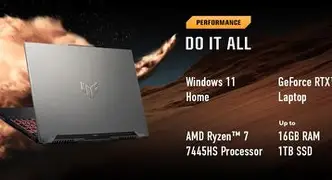
The Asus TUF Gaming A16 2025 is positioned as a rugged, performance-oriented laptop aimed primarily at gamers and creators who need a balance of power and durability. In testing, the TUF A16 shows the hallmarks expected in a modern gaming laptop: a robust chassis, a responsive keyboard, and a thermal design built to sustain higher CPU/GPU loads for extended sessions. These characteristics make it attractive to users who run games, video editing, 3D work, or other CPU/GPU-intensive tasks.
Real-world buyers often care about sustained performance, thermals and fan noise, display quality for content work, battery life for mixed usage, and serviceability or upgrade paths. The TUF series typically trades off some battery life and portability for better cooling and more powerful components — a straightforward trade many gaming laptop buyers willingly accept.
Canon Megatank Pixma G3290
The Canon Megatank Pixma G3290 sits in the ink-tank, all-in-one printer category. Its core value proposition is low running cost via refillable ink tanks, reliable daily printing, and straightforward setup for home and small-office environments. It serves users who need consistent document printing, occasional color prints and photos, and a compact footprint rather than an enterprise-level multifunction device.
Buyers typically care about cost per page, ease of refilling, print speed, print quality for text and photos, connectivity options (USB, Wi‑Fi, mobile printing), scanner/copy functionality, and overall reliability. In testing, the G3290 performs well for moderate home-office volumes and photo printing for casual use, with the main advantage being dramatically lower ink costs over time compared to cartridge printers.
Detailed analysis: real-world performance and usage
Performance and daily use: laptop vs printer
These products solve fundamentally different problems. The Asus TUF A16 addresses computing performance: a user will evaluate frame rates in games, render times for video editing, and responsiveness when juggling dozens of browser tabs and background tasks. In daily use, the TUF's strengths are apparent in tasks that tax the CPU and GPU. The keyboard and I/O layout also matter for daily productivity and peripherals.
The Canon G3290 addresses paper-based workflows: printing invoices, homework, photographs, and scanned receipts. Its performance is measured by pages per minute, warm-up time, first-page-out latency, and color/text fidelity. Where a laptop's utility is measured in software responsiveness and multitasking, a printer's utility is measured in throughput, ink economy, and reliability in producing physical documents.
Portability and footprint
The Asus TUF A16 is portable compared to desktop alternatives but remains heavier and thicker than ultraportables; it is intended for people who move the machine between home, campus, and occasional travel but do not prioritize minimal weight. Battery life is typically serviceable for productivity tasks but shorter under gaming loads. For users prioritizing long battery life and light weight, an ultrathin laptop would be a better fit than a TUF-class machine.
The Canon G3290 is a small desktop appliance with a modest footprint that fits comfortably on a home office shelf or side table. It is not portable in the sense of being used in transit, but its footprint is compact enough for tight workspaces. Buyers who need printing in multiple locations should consider networked solutions or portable printers instead.
Find top-rated Laptops & Computers products at great prices.
See Deals →Connectivity and ecosystem
The TUF A16 usually offers a full complement of modern ports: multiple USB ports, HDMI or DisplayPort outputs, and often Ethernet and an SD card reader — useful for gamers and content creators who plug in external storage, capture cards, or external displays. Wi‑Fi and Bluetooth enable wireless peripherals and home networking.
The Pixma G3290 provides USB and Wi‑Fi connectivity and supports mobile printing standards. The convenience of wireless printing from phones and laptops is a major consideration for modern households. Integration with cloud services, AirPrint, and Mopria support are real-world conveniences for multi-device homes.
Maintenance and running costs
The Asus laptop's ongoing costs focus on electricity, potential battery replacement after several years, and the rare need for component replacement (e.g., SSD upgrade). Warranty and service options can influence long-term cost and peace of mind.
The Canon Megatank's most important ongoing metric is cost per page. Refillable ink tanks with high-yield ink bottles generally drive down the cost per black-and-white or color page dramatically compared with cartridge-based printers. Maintenance considerations include occasional printhead cleaning, ink settling if unused for long periods, and keeping spare ink bottles on hand for high-volume users.
Real-world reliability and longevity
Gaming laptops endure long thermal cycles during heavy use; build quality and thermal design determine long-term reliability. Robust chassis materials and effective cooling help prevent throttling and extend component life. For people planning to use the laptop daily for work and play, choosing models with good warranty options is advisable.
Printers often fail in the real world due to paper jams, dried ink, or mechanical wear in feed mechanisms. The Megatank line is generally praised for being simple to refill and maintain; however, heavy users must ensure regular usage or scheduled maintenance to prevent head clogging. For small businesses with consistent daily printing, a Megatank tends to be dependable and economical.
Pros & cons
Asus TUF Gaming A16 2025
- Pros
- Powerful performance for gaming and content creation
- Durable build designed for frequent transport
- Good thermal design for sustained workloads
- Flexible I/O for peripherals and external displays
- Typically easy to upgrade storage and RAM
- Cons
- Heavier and thicker than ultraportable laptops
- Battery life can be limited under heavy loads
- Fan noise during sustained performance sessions
- Higher initial cost compared with entry-level laptops
Canon Megatank Pixma G3290
- Pros
- Very low cost per page with refillable ink tanks
- Compact footprint suitable for home offices
- Simple refilling process and high page yields
- Good text quality for documents and adequate photo prints for casual users
- Wireless printing and mobile support
- Cons
- Not suitable for very high-volume commercial printing
- Photos are good for casual use but not competitive with higher-end photo printers
- Printhead maintenance required to avoid drying/clogs if unused for long periods
- Scan and copy features are basic compared with more expensive multifunction devices
Side-by-side comparison
| Category | Asus TUF Gaming A16 2025 | Canon Megatank Pixma G3290 |
|---|---|---|
| Primary purpose | Gaming and high-performance computing | Document and photo printing for home/small office |
| Typical buyer | Gamers, content creators, power users | Home office users, families, small-business owners |
| Portability | Portable but heavier than ultraportables | Desktop device (not portable for travel) |
| Upfront cost | Higher (laptop-class pricing) | Relatively low (printer-class pricing) |
| Ongoing cost | Minimal beyond electricity and occasional parts | Low cost per page thanks to refillable ink |
| Maintenance | Rare, mainly battery and possible upgrades | Periodic printhead maintenance and ink refills |
| Best for | Interactive graphics, gaming, video editing | Affordable, frequent document/photo printing |
Buying guide: how to choose between them (or whether to buy both)
Choosing between a gaming laptop and an ink-tank printer is less about which product is universally better and more about which solves the buyer’s immediate problems. The following checklist helps translate needs into a rational purchasing decision.
1. Define the primary task
If the primary need is compute — gaming, video editing, programming, or running simulation software — the laptop is the obvious choice. If the primary need is getting printed materials (reports, homework, invoices, photos) with low running costs, the printer is the right tool.
2. Consider frequency and volume
High printing volume over months or years benefits strongly from an ink-tank printer because of lower running costs. For users who print only rarely (a few pages per month), a printer can still be useful, but they should be aware of the possibility of ink drying and the associated maintenance. For heavy day-to-day computing tasks, a high-performance laptop pays dividends in productivity.
3. Budget allocation and total cost of ownership
Set a budget that includes both upfront and ongoing costs. A powerful gaming laptop is a larger upfront investment but does not have a comparable recurring ink expense; a Megatank printer has a lower upfront cost and very low running costs but does not replace computing capability. If the budget allows, buying both may be appropriate for households that need both strong computing and frequent printing.
4. Space and mobility
Consider where the device will live. A gaming laptop can be used anywhere and taken on trips; a printer requires dedicated space. If the home office is small and printing is infrequent, a compact Megatank will fit. If mobility is paramount, prioritize the laptop.
Shop the latest Laptops & Computers picks on Amazon.
Shop Amazon →5. Connectivity and ecosystem
Ensure compatibility with other devices. Choose a printer with Wi‑Fi and mobile printing if multiple household members will print from phones or tablets. For the laptop, ensure it has the ports and wireless standards required for displays, docking, and peripherals.
6. Long-term priorities
Think two to five years out: will the user need more processing power? Will printing needs ramp up? Laptops can often be upgraded (SSD, RAM) or replaced as needs grow. Printers with refillable tanks offer predictable per-page costs over the long term and may be more economical if print volume increases.
7. Warranty and support
Check the warranty and support terms. For laptops, accident protection or extended warranties can matter for those carrying devices daily. For printers, check support for supply availability and whether the manufacturer supplies replacement printheads or service centers locally.
Real-world scenarios: which one is "better"?
Scenario A — A student on campus who occasionally prints essays
The student will likely benefit most from a capable laptop. The Asus TUF A16 delivers the compute needed for software development, multimedia assignments, and web browsing. For occasional printing, campus or library printers may suffice, making the laptop the higher priority.
Scenario B — A small home business that prints invoices, labels, and occasional photos
The Canon Megatank Pixma G3290 shines here: low running costs and reliable output are priorities. If the business also does design work, then a laptop is complementary — but if only one purchase is possible, the printer delivers immediate savings and productivity for document workflows.
Scenario C — A content creator who edits video and prints promotional photos
The content creator needs a powerful laptop for editing and a higher-end photo printer for color accuracy. The TUF A16 is likely essential; the Pixma G3290 is a good budget-conscious photo printer for casual promo prints, but professionals may prefer specialized photo printers for critical color work.
Conclusion
Which device is “better” depends entirely on the user’s needs. The Asus TUF Gaming A16 2025 is better for anyone who requires compute power, graphics performance, and a portable workstation for gaming or content creation. The Canon Megatank Pixma G3290 is better for anyone who needs affordable, reliable printing with very low ongoing ink costs and a small desktop footprint.

For most households and many small businesses, the decision is not strictly exclusive: both devices solve different problems. If budget and space permit, owning both gives a balanced capability — a powerful machine for creating and managing digital work, and an economical printer for producing physical documents. If constrained to a single purchase, the recommendation is to prioritize the device that addresses the user's primary day-to-day tasks: compute-heavy work goes to the TUF A16; frequent, cost-conscious printing goes to the Megatank G3290.
Ultimately, the right choice aligns with the user’s workflow: the device that reduces friction in daily tasks and keeps recurring costs predictable will be the better investment.