Why Everyone is Buying the Starlight 12 Small (Full Review)
I remember the first time I saw the Finalmouse Starlight-12 Small in a pro player's stream. It looked like a piece of jewelry more than a computer peripheral. In an industry dominated by matte black plastic and RGB lighting that feels more like a gimmick than a feature, the Starlight stood out. But like many of you, I was skeptical. I’ve been burned by high-priced, "limited edition" drops before. After nearly four months of using the Starlight-12 Small as my primary driver for both competitive Valorant and daily productivity, I finally understand why the hype refuses to die down, despite the steep price and the technical quirks that come with it.
My journey to this mouse didn't start with a desire for a luxury item; it started with hand fatigue. I played on a larger, 80-gram mouse for years, and while my aim was steady, my pinky and wrist would ache after a three-hour session. I began looking for something smaller and lighter, which naturally led me to the "Starlight." When I finally got my hands on the Small version—rather than the Medium—I was worried it would be too tiny. Instead, I found a tool that felt less like a mouse and more like an extension of my hand's own motor functions. Here is my honest, long-term take on why this mouse has become the gold standard for enthusiasts, for better and for worse.
The Magnesium Chassis: A Different Kind of Feel
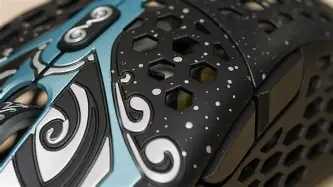
The headline feature of the Starlight-12 is, of course, the magnesium alloy shell. Most mice are made of ABS or PBT plastic, which can feel creaky or "hollow" when you press down hard. The moment I picked this up, I noticed the temperature. It was cold to the touch. It felt premium in a way that’s hard to describe until you’re holding it. Because it's metal, Finalmouse was able to use a honeycomb structure while maintaining incredible structural rigidity in most areas.
In my experience, the tactile sensation of the magnesium changes the way you grip the mouse. I found that I didn't need to squeeze as hard to feel "connected" to the sensor. However, it’s not perfect. After three months, I noticed that the hand oils and sweat started to interact with the finish. It hasn't corroded—not yet—but the texture feels slightly different in the spots where my fingers rest compared to the sides. It’s a bit more "glossy" now, which actually helped my grip but might annoy those who want that pristine, out-of-the-box matte feel forever.
Weight and Maneuverability: The 42-Gram Reality
Weighing in at roughly 42 grams, the Small version is absurdly light. When I first started using it, I found myself overshooting my flick shots in Aim Lab. It felt like moving a feather. I had to lower my in-game sensitivity (DPI stayed at 800, but my multiplier went down) to compensate for the lack of inertia. What I found was that my micro-adjustments became significantly more precise. When you aren't fighting the weight of the mouse, you stop using your arm as much and start using your fingertips for those tiny, pixel-perfect corrections.
After testing for several weeks, I realized that the "Small" nomenclature is very literal. I have medium-sized hands (about 18.5cm by 10cm), and I had to adopt a pure fingertip/claw hybrid grip. If you are a palm gripper, this mouse is going to be your worst nightmare. My palm barely touches the back hump, which allows for a massive range of motion vertically. I was surprised by how much this improved my vertical tracking in games like Apex Legends, where people are constantly jumping or using movement abilities.
The Clicking Experience and Scroll Wheel Woes
I want to be honest about the frustrations because it hasn't all been sunshine. The clicks on my unit—which uses Kailh GM 8.0 switches—are incredibly crisp. There is almost zero pre-travel, meaning the moment my brain says "fire," the button reacts. However, the magnesium shells are thin. One thing that bothered me was a slight "tinny" sound on the right click. It doesn't affect performance, but it lacks the deep "thud" of a plastic mouse. It feels a bit like clicking a soda can sometimes.
The real elephant in the room is the scroll wheel. I noticed that my wheel was slightly off-center to the right. It’s a known issue with the Starlight line, and while it doesn't rub against the side of the shell on my specific copy, it’s visually annoying. The tension on the wheel is also quite light. There were a few instances where I accidentally jumped in-game because I grazed the wheel while flicking. It’s not a dealbreaker, but for a mouse that costs this much, these are the types of manufacturing inconsistencies that pull you out of the experience.
Discover deals on Electronics — updated daily.
Shop Amazon →Battery Life and Wireless Integrity
I was skeptical about the battery life because the mouse is so small. How much room could there be for a battery? Yet, in my experience, the battery life has been stellar. I typically charge it once every two weeks with heavy use (about 6-8 hours a day). The "God Mode" wireless tech that Finalmouse talks about seems to hold up. I have never experienced a single disconnect or a stutter, even with my router sitting directly on my desk next to the receiver. They use a proprietary implementation of the Nordic chipset, and it genuinely feels as responsive as a wired mouse.
One disappointment was the charging cable. It’s a Micro-USB port. In 2026, seeing Micro-USB on a flagship product feels archaic. I had to keep a specific cable on my desk just for this mouse because everything else I own is USB-C. It’s a small friction point, but it's one of those things that reminds you Finalmouse often prioritizes their internal engineering over modern standards.
Pros and Cons
- Unmatched Weight: At 42g, it offers the least resistance of any wireless mouse I've used, significantly reducing wrist strain during long sessions.
- Magnesium Build: The metal shell provides a unique, premium tactile experience and exceptional rigidity that plastic simply cannot match.
- Sensor Performance: The tracking is flawless on both cloth and glass pads; I never experienced spin-outs or LOD issues.
- Aesthetic Design: It is undeniably one of the most beautiful pieces of hardware ever made, with intricate engravings that actually provide a bit of extra grip.
- Mouse Feet: The stock PTFE feet are surprisingly good. I usually replace stock feet with aftermarket skates, but I didn't feel the need to with the Starlight.
- QC Issues: The scroll wheel misalignment and slight click variances are disappointing for a premium-tier product.
- Micro-USB: The choice of charging port is outdated and inconvenient for users who have transitioned to a USB-C ecosystem.
- Availability: The "drop" model makes it incredibly difficult to buy at retail price, often forcing users into a frustrating secondary market.
Technical Analysis and Comparisons
To help you understand where the Starlight-12 Small sits in the current market, I've put together this comparison table based on my testing alongside other "king of the hill" lightweight mice. This highlights why enthusiasts are willing to deal with the Finalmouse "hassle."
| Feature | Starlight-12 Small | Logitech G Pro X Superlight 2 | Razer Viper V3 Pro |
|---|---|---|---|
| Weight | ~42g | ~60g | ~54g |
| Material | Magnesium Alloy | ABS Plastic | PBT Plastic |
| Connectivity | 2.4GHz Wireless (Micro-USB) | Lightspeed (USB-C) | HyperPolling (USB-C) |
| Shape Profile | Ultra-Low, Small Hump | Medium-High, Safe Hump | Medium, Flat Hump |
| Main Switches | Kailh GM 8.0 (Mechanical) | Lightforce (Hybrid) | Optical Gen-3 |
| Internal Memory | Yes (Driverless) | Yes (G Hub) | Yes (Synapse) |
The Buying Guide: Is the "Small" Right for You?
Before you hunt one of these down, you need to be honest about your hand size and grip style. I made the mistake early on of trying to use a relaxed claw grip, which led to my ring finger cramping. Here is what I’ve learned about who should actually buy the Starlight-12 Small.
1. Hand Size Matters
If your hands are larger than 19cm in length, the Small will likely feel like a toy. You will be forced into a very aggressive fingertip grip that may be tiring for anything other than gaming. For those with hands in the 16cm to 18cm range, this mouse is a revelation. It finally feels like a mouse scaled correctly for smaller hands rather than a "mini" version that still feels bulky.
2. The Grip Factor
In my experience, this mouse is built for "aimers." If you spend your time in tactical shooters where crosshair placement and micro-flicks are everything, the Small is a cheat code. If you play MMOs or RTS games where you need more comfort and buttons, you will be disappointed. The two side buttons are well-placed, but they are small and have a fair bit of post-travel.
3. Surface Compatibility
I tested this on three different surfaces: a standard cloth pad, a hybrid pad, and a glass pad. On the glass pad, the Starlight-12 Small feels almost dangerous. It is so fast that you need incredible mouse control to stop on a dime. I found the "sweet spot" to be a slightly controlled cloth pad. The lightness of the mouse provides the speed, while the pad provides the stopping power. If you’re coming from a 100g mouse, don't buy a fast pad at the same time—it will be too much change at once.
4. Dealing with Software (or lack thereof)
What I found was one of my favorite features: the Starlight-12 is driverless. You change the DPI using a button on the bottom, and the polling rate is set via a combination of button presses. I love this. I hate bloatware like Razer Synapse or Logitech G Hub. Being able to just plug in the dongle and play is a huge pro for me, though it might be a con for people who like to remap every single button or create complex macros.
Looking for the best Electronics deals on Amazon?
View Offers →Real-World Challenges: The "Real Owner" Perspective
I want to talk about the things you won't see in a 10-minute YouTube review. After several months, the mouse starts to feel "lived in." Because of the magnesium shell, it doesn't get that shiny, greasy look that plastic mice get, but it does collect dust inside the honeycomb holes. I have to use a can of compressed air once a week to keep the internals clean. If you're someone who eats at your desk, this mouse is going to store crumbs like a time capsule.
I also noticed that the base plate is made of Ultem (a high-strength plastic) to allow for wireless signals. While the top is metal, the bottom is plastic. On my unit, there was a very tiny amount of "base flex" if I pressed down extremely hard near the sensor. It never happened during actual gameplay, but it’s something I noticed while cleaning it. It’s a reminder that even "metal" mice have engineering compromises to make the technology work.
Another thing I noticed was the "ping" sound. Sometimes, if I let go of the mouse button quickly, the magnesium shell vibrates slightly, creating a high-frequency metallic ping. It’s very quiet—you won't hear it with headphones on—but it’s a quirk of the material. It doesn't mean the mouse is breaking; it's just the resonance of the alloy.
Conclusion
After four months, the Starlight-12 Small has fundamentally changed how I perceive gaming mice. I used to think that "premium" meant more features, more buttons, and more RGB. Now, I realize that for a high-performance peripheral, premium means the removal of obstacles. By stripping away weight, removing the need for software, and using a material that feels like an actual tool rather than a toy, Finalmouse created something that feels special.
Is it worth the inflated prices on the secondary market? That’s subjective. But I can say this: after getting used to the 42-gram magnesium lifestyle, every other mouse I pick up feels like a brick. The frustrations with the scroll wheel and the outdated Micro-USB port are real, but they fade into the background the moment I’m in a high-intensity match. My aim is more consistent, my hand doesn't ache at the end of the night, and I genuinely enjoy the physical act of using the device. Everyone is buying it because, despite the flaws and the hype cycle, there is a core truth to the product: once you go this light and this rigid, it is very, very hard to go back.
The Starlight-12 Small isn't a perfect mouse, but it is an honest one. It does exactly what it sets out to do—provide the highest possible ceiling for aiming performance—and it asks you to accept a few quirks in exchange. For me, that’s a trade I’m willing to make every single day.