Xiaomi Smart Band 10 First Look: Unboxing and Impressions
Introduction
The Xiaomi Smart Band 10 arrives as the latest iteration in a long-running line of budget-friendly fitness trackers. Marketed toward users who want a compact wearable that covers the essentials — activity tracking, sleep monitoring, notifications, and long battery life — the Band 10 targets buyers who prioritize value over flagship smartwatch features. This first-look review covers the unboxing experience, design and comfort, display and interface, health and fitness capabilities, battery performance, software behavior, real-world use cases, and a practical buying guide to help readers assess whether the Band 10 fits their needs.
Unboxing: What’s in the Box
The unboxing presentation follows Xiaomi’s minimal approach. Inside the retail packaging, the following items are typically included:
- Xiaomi Smart Band 10 unit with factory-fitted strap
- Magnetic charging cable or cradle
- Quick start guide and warranty card
There are no extra accessories or replacement bands in the box, which aligns with competitors in the same price segment. The included charger is compact and convenient for travel, while the documentation provides basic setup instructions and safety information. The straightforward unboxing keeps the focus on the device itself rather than bundled extras.
Design and Comfort
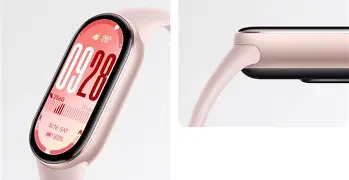
Physically, the Band 10 continues Xiaomi’s tradition of a slim, lightweight module housed in a soft silicone strap. The tracker is unobtrusive and well-suited to 24/7 wear, which is essential for continuous heart-rate and sleep tracking. The case shows modest refinements over previous generations: slightly slimmer bezels, a flatter back plate for improved skin contact, and a secure clasp design that keeps the band stable during exercise.
Strap comfort is a major consideration for buyers who intend to wear the device to sleep. The Band 10’s strap uses familiar materials that balance softness with durability. Sweat resistance during workouts is adequate, and the IP rating (water resistance) permits showering and pool use, making it suitable for everyday fitness routines and casual swimmers. Swapping straps remains straightforward for users who prefer leather or fabric aftermarket options.
Display and Interface
The display on the Band 10 is an important upgrade in terms of clarity and brightness. Xiaomi has improved contrast and touch responsiveness, which helps when glancing at metrics during a run or checking notifications on the move. The AMOLED panel (or enhanced OLED in some regional variants) delivers vivid colors and deep blacks, while auto-brightness adapts reasonably well to outdoor sunlight.
Navigation remains primarily gesture-based, with a mix of taps and swipes. The interface is deliberately concise: large, readable fonts and recognizable icons make it easy to access the most-used screens such as heart rate, steps, workout modes, and notifications. The lack of a full app ecosystem on the band itself keeps interactions quick, but also means more advanced features require the companion app on a paired smartphone.
Health and Fitness Features
Health and fitness tracking are core to the Band 10’s value proposition. Key sensors include an optical heart-rate monitor, SpO2 sensor for blood oxygen estimation, accelerometer for activity recognition, and algorithms for sleep staging. The device supports multiple workout modes ranging from walking, running, and cycling to indoor workouts and user-customizable sessions.
Heart rate tracking is accurate for casual users and steady-state cardio sessions, though wrist-based optical sensors still lag chest straps during high-intensity interval training. SpO2 readings are useful for occasional checks and trend observation but should not replace medical devices for clinical decisions. Sleep tracking benefits from continuous monitoring — the band estimates sleep stages and reports on interruptions, total sleep time, and sleep quality. While sleep staging is improving across wearables, the Band 10 provides sensible, actionable summaries that help owners spot long-term patterns.
Looking for the best Electronics deals on Amazon?
Shop Amazon →Battery Life and Charging
Battery life remains one of the Band 10’s strongest selling points. Xiaomi’s power optimizations allow the band to last multiple days on a single charge under normal usage, with reported figures often ranging between 7 and 14 days depending on settings such as continuous heart-rate monitoring, always-on display (if enabled), and notification frequency. For users who disable high-frequency continuous monitoring, the band can stretch closer to the upper end of that range.
Charging is straightforward with the included magnetic cable. A short charging session restores a significant portion of battery, which is convenient for users who keep a cable at the desk or bedside. The absence of wireless charging or proprietary docks keeps costs down without impacting day-to-day convenience.
Software and Connectivity
The Band 10 pairs with Xiaomi’s companion app, which aggregates health data, offers customization, and manages firmware updates. The app’s interface is typically clear and segmented into activity, health, and settings sections. Data sync is generally reliable over Bluetooth, though initial setup can be slightly slower on some older phones due to permission prompts and background service requirements.
Notifications for calls, messages, and app alerts are supported, with brief message previews on the band. Quick replies are limited or unavailable, consistent with most fitness bands in this class. Third-party app integration is limited; the band primarily relies on the phone app for deeper analysis and workout history. Privacy-conscious buyers will appreciate that Xiaomi’s app allows data export and in-app control over what health metrics synchronize to cloud services.
Real-World Use Cases
Several everyday scenarios highlight where the Band 10 performs well:
- Commute and desk work: The lightweight design and subtle vibration alerts make the band a discreet notification hub for busy professionals who prefer not to check a phone constantly.
- Fitness tracking for casual athletes: Runners and cyclists who track distance and heart rate will find the Band 10 useful for route-agnostic workouts. Connected GPS via the phone provides route mapping without a GPS chip on the band itself.
- Sleep hygiene monitoring: Individuals seeking to improve sleep habits can use trend data and sleep-stage summaries to adjust bedtime routines.
- Family health monitoring: For parents and older adults, the device offers an easy way to keep an eye on daily activity and resting heart rate trends, aiding early detection of deviations from baseline health metrics.
These use cases reflect the expectations of the target audience: users who want continuous, unobtrusive monitoring and helpful summaries rather than medical-grade diagnostics or complex smartwatch features.
Pros & Cons
- Pros:
- Lightweight, comfortable design suitable for 24/7 wear
- Improved display with good visibility in most lighting conditions
- Strong battery life with multi-day use between charges
- Comprehensive basic health and sleep tracking for the price range
- Reliable notification delivery and simple, intuitive interface
- Cons:
- Limited on-device app ecosystem and customization compared with full smartwatches
- No built-in GPS (relies on smartphone for route mapping)
- Advanced metrics (e.g., VO2 max, stress tracking) may be less accurate than premium devices
- Third-party app integration and smart home controls are limited
Comparison: Xiaomi Smart Band 10 vs. Alternatives
For readers considering multiple options, a compact comparison helps clarify strengths and trade-offs. The following table compares the Band 10 with the previous generation Band 9 and a mainstream competitor in the same category.
| Feature | Xiaomi Smart Band 10 | Xiaomi Smart Band 9 | Fitbit Inspire 3 |
|---|---|---|---|
| Display | Improved AMOLED, brighter, slimmer bezels | AMOLED, solid brightness | AMOLED, slightly smaller |
| Heart rate & SpO2 | Continuous HR, SpO2 spot checks | Continuous HR, SpO2 spot checks | Continuous HR, SpO2 spot checks |
| Built-in GPS | No (connected GPS) | No (connected GPS) | No (connected GPS) |
| Battery Life | ~7–14 days (variable) | ~7–12 days (variable) | ~5–10 days (variable) |
| Water Resistance | Swim-friendly (IP68 / 5ATM depending on region) | Swim-friendly (IP68 / 5ATM) | Swim-friendly (5ATM) |
| Companion App | Xiaomi Fit / Zepp Life | Xiaomi Fit / Zepp Life | Fitbit app (wider ecosystem) |
| Best For | Value-focused users wanting core tracking & long battery | Users wanting a proven, budget tracker | Users wanting a polished software ecosystem and community features |
Buying Guide: How to Decide if the Band 10 Is Right
When choosing a fitness band, buyers typically weigh factors such as battery life, health-tracking accuracy, screen quality, comfort, and app ecosystem. The following guide highlights the most relevant points for the Band 10.
Find top-rated Electronics products at great prices.
See Deals →1. Primary Use Case
If the primary aim is step counting, daily activity tracking, sleep monitoring, and lightweight notification handling, the Band 10 is a strong contender. For users requiring built-in GPS, detailed route tracking, or extensive third-party app integrations, a different device may be more suitable.
2. Battery Expectations
Battery longevity is a decisive factor for many buyers. The Band 10’s multi-day battery life reduces charging frequency and supports continuous sleep and heart-rate monitoring. Buyers who value extended uptime should consider disabling non-essential always-on features to extend battery life further.
3. Health and Fitness Features
For casual runners and gym-goers, the Band 10 provides the necessary metrics: heart rate, step counts, active minutes, and workout summaries. Users seeking medical-grade accuracy or advanced sport-specific metrics (running power, cadence via internal sensors) should opt for higher-end sports watches.
4. Comfort and Wearability
Comfort influences long-term adoption. The Band 10’s slim profile and soft strap favor continuous wear, including overnight monitoring. Buyers who prioritize interchangeable fashion bands should verify third-party strap compatibility and the ease of replacement.
5. Software and Ecosystem
The Xiaomi companion app offers clear visualizations and export options. Those invested in a particular health ecosystem (for example, Fitbit Premium or Apple Health-centric workflows) should confirm cross-platform syncing and whether the app meets data portability needs.
6. Price and Value
The Band 10 targets value-seeking buyers. The device’s balance of display quality, battery life, and core health features often delivers a better price-to-feature ratio than more expensive smartwatches. Evaluate the device against seasonal sales and local pricing to determine relative value.
Practical Tips for New Owners
- Enable the most useful notifications and disable noisy apps to reduce distraction and save battery life.
- Calibrate sleep and activity expectations by wearing the band consistently for at least a week to establish personal baselines in the app.
- Use the band’s Do Not Disturb and schedule modes to prevent overnight disturbances while preserving sleep tracking.
- Keep the firmware up to date through the companion app for the latest accuracy improvements and bug fixes.
- Invest in a spare strap if customization or comfort alternatives are desired; silicone, nylon, and leather options are widely available from third-party vendors.
Conclusion
The Xiaomi Smart Band 10 presents a pragmatic option for users seeking a competent fitness tracker without the complexity or cost of a full smartwatch. It refines several practical areas — notably display clarity, comfort, and battery life — while retaining the straightforward, value-focused approach that has characterized the series. For everyday health monitoring, sleep tracking, and discreet notification handling, the Band 10 satisfies common buyer priorities. Those who need advanced sport metrics, built-in GPS, or a richer app ecosystem should evaluate alternative devices, but for many buyers the Band 10 strikes a compelling balance between features, wearability, and price.